NUK e-Eureka IT Volunteer Team Empowers Rural Students in Pingtung and Taitung to "Command" Robots with Math
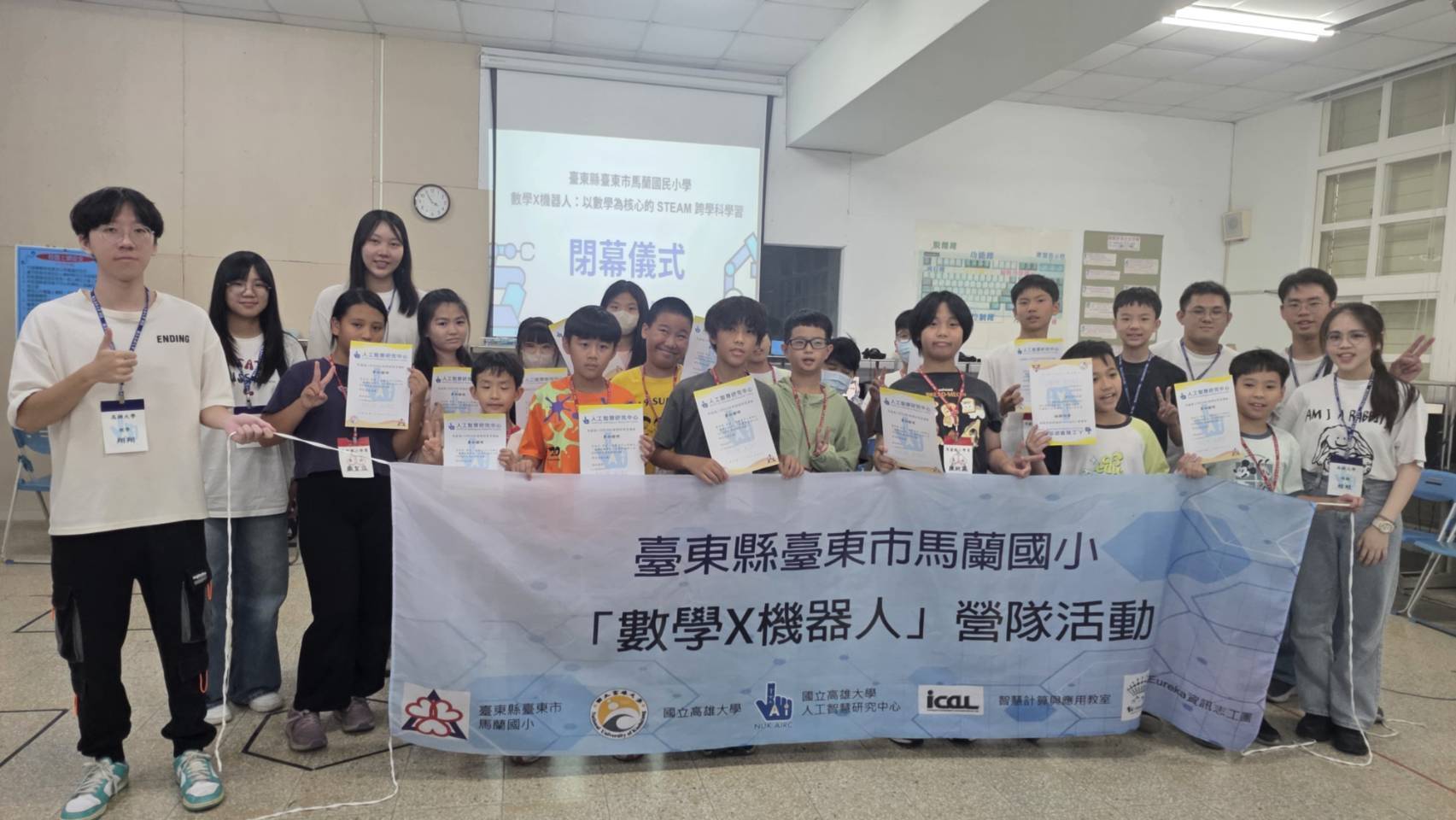
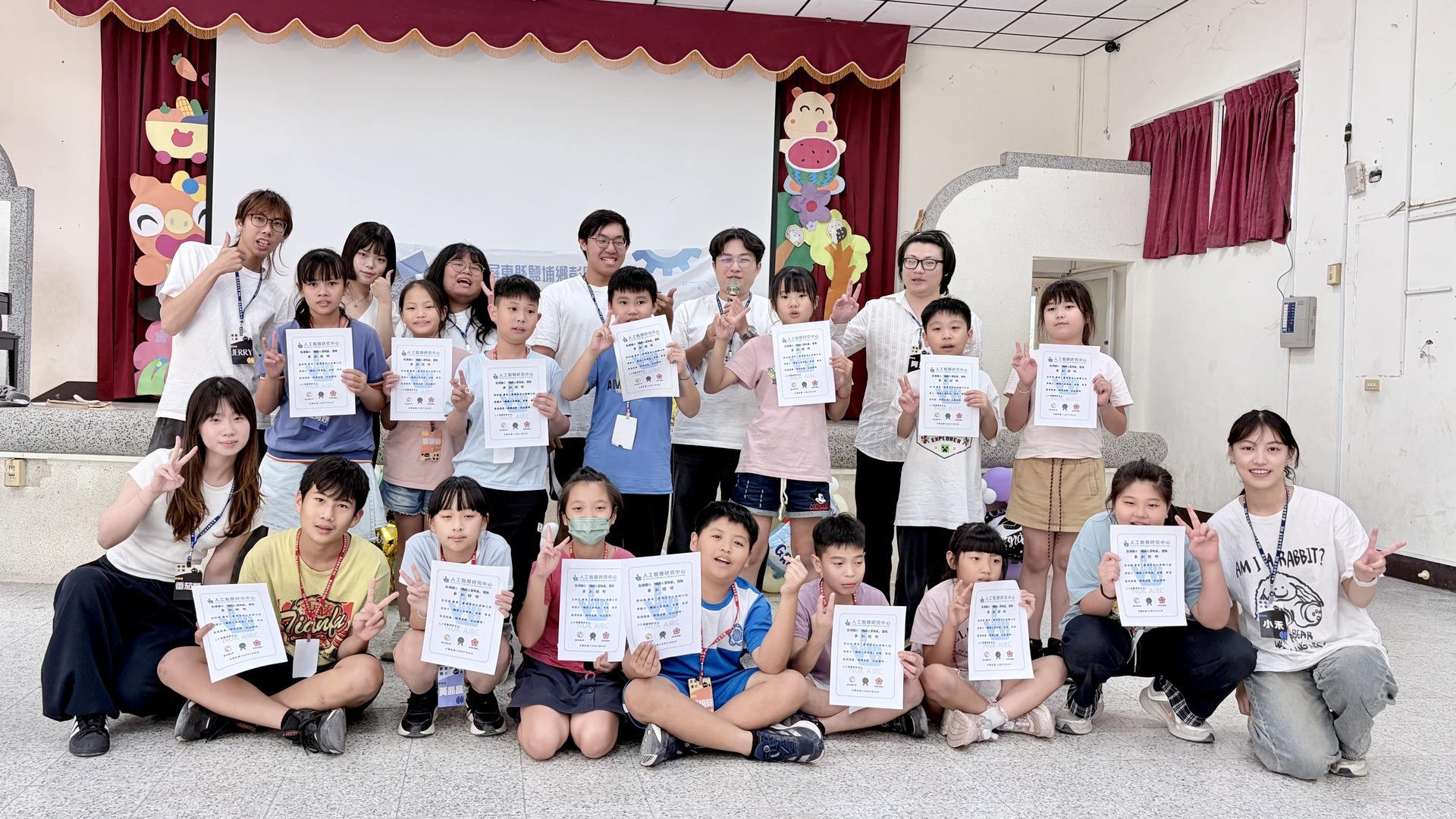
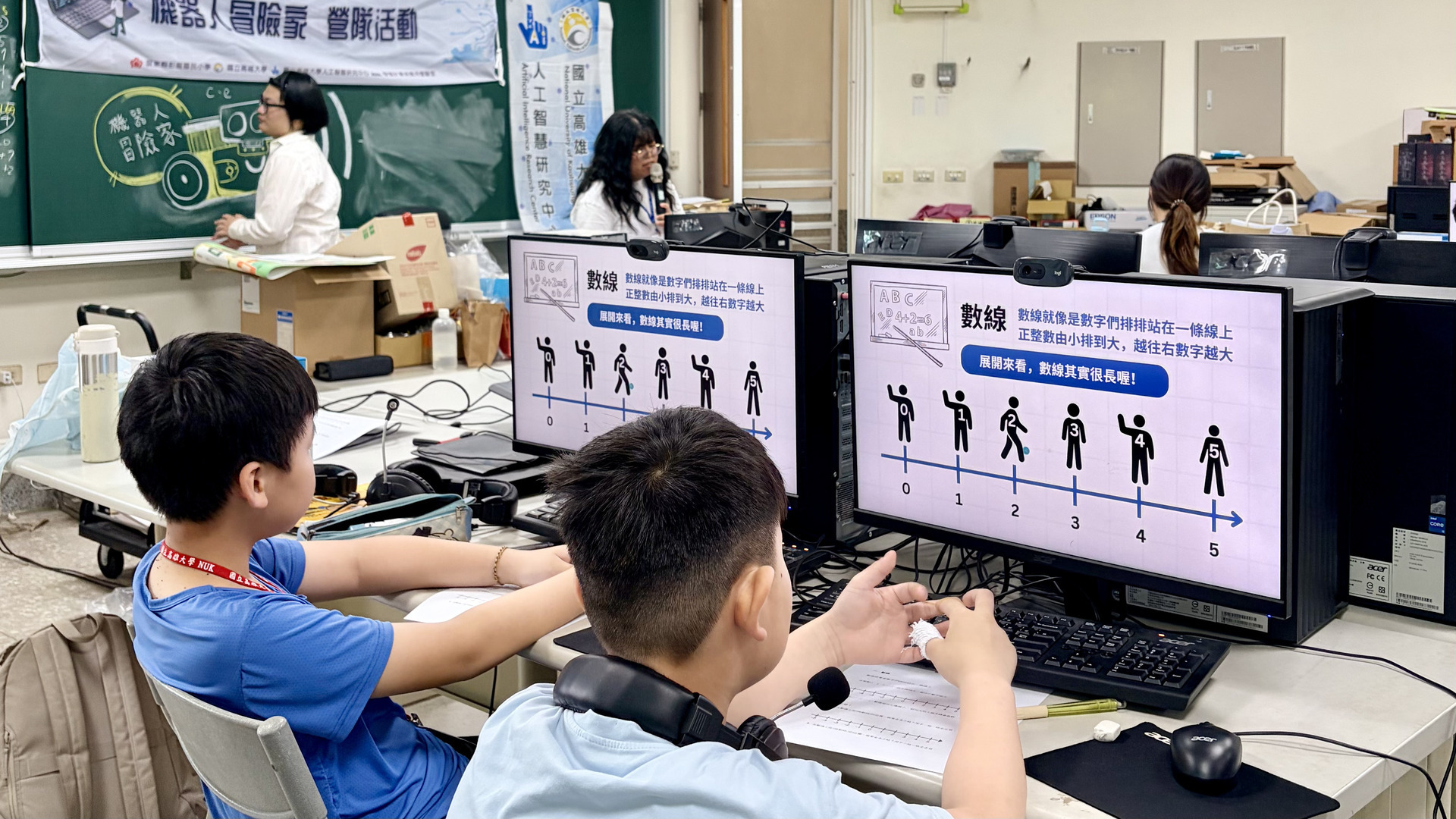
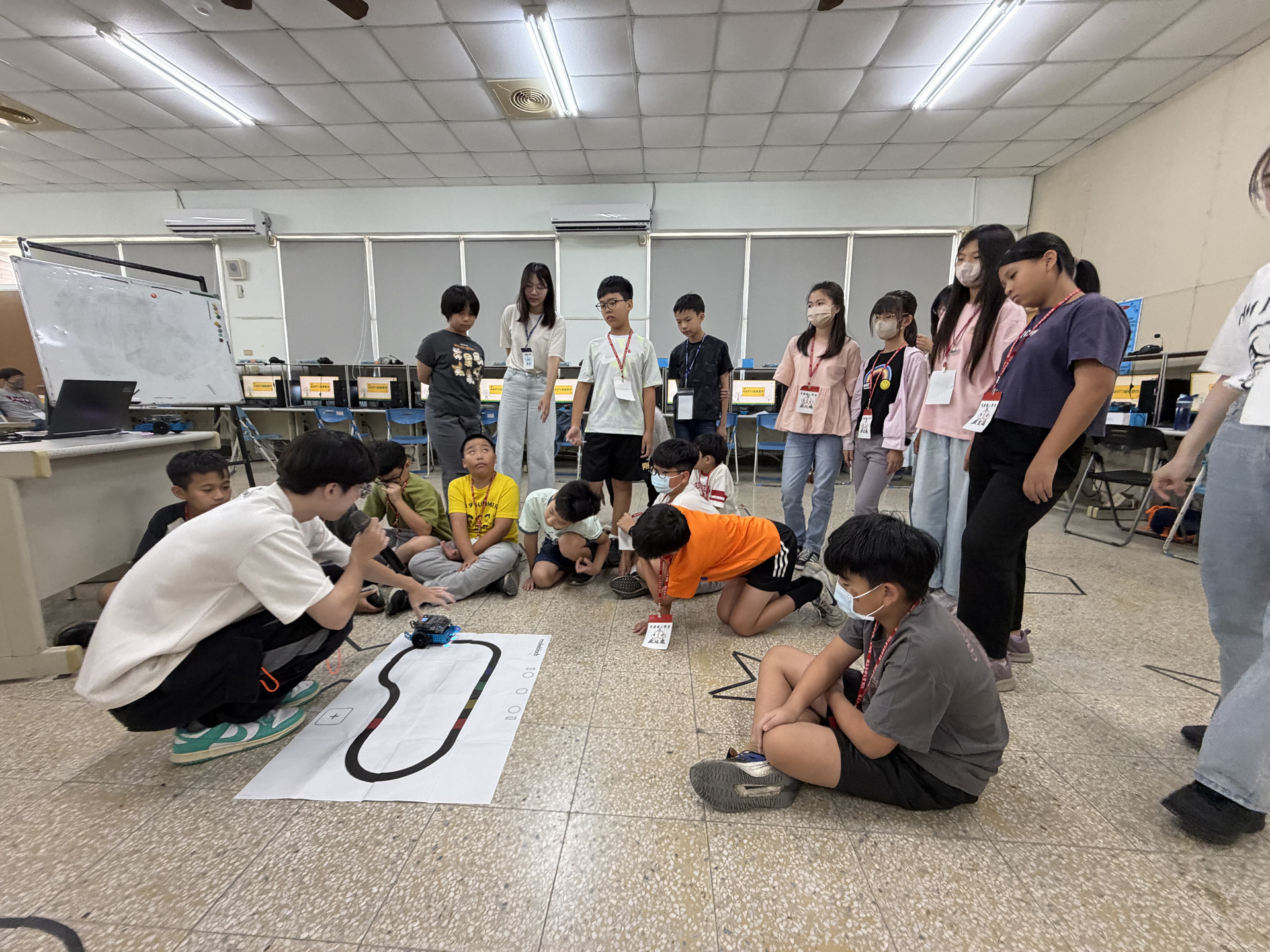

2026-08-03 Kaohsiung,Taiwan — Hand-drawing a triangle is simple, but directing a robot to draw one requires thinking mathematically. The "e-Eureka IT Volunteer Team" from the National University of Kaohsiung (NUK) recently traveled to Pengtsuo Elementary School in Pingtung County and Malan Elementary School in Taitung City, leading students to control mBot2 robots through programming. Some students even progressed from drawing triangles and squares to 17-sided and 67-sided polygons, experiencing firsthand through repeated trial and error how mathematical concepts translate into a robot’s every movement.
Dr. Chih-Hung Wu, Director of NUK's Artificial Intelligence Research Center and advisor to the volunteer team, stated that the event was integrated with the National Science and Technology Council (NSTC) project "Math × Robotics: Designing Math-Centric STEAM Interdisciplinary Learning Materials." The initiative aims to guide students to turn geometric and coordinate concepts into code instructions and path planning. Dr. Wu emphasized that the goal of short-term camps is not to turn children into master programmers in two days, but to inspire them to realize that math extends far beyond textbooks—it is a vital tool for path planning, robotics control, and real-world problem-solving.
The camps tailored their curricula to the specific learning contexts of both schools:
-
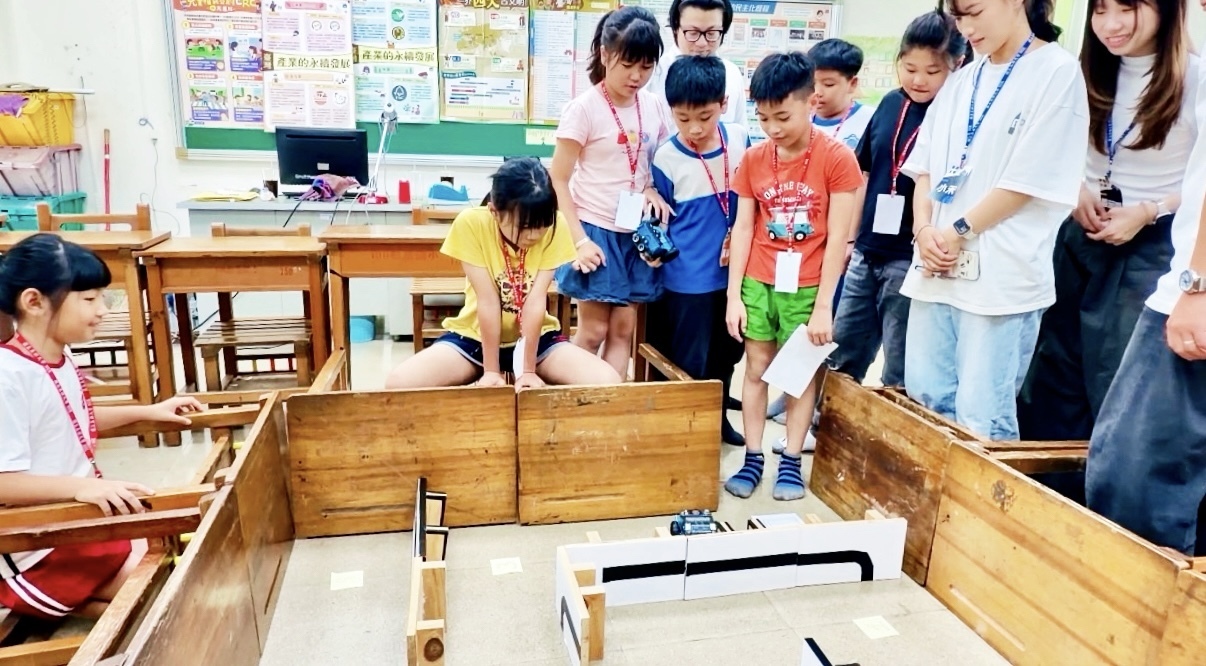
Pengtsuo Elementary School (July 2–3): The curriculum integrated geometry, mazes, equations, and Cartesian coordinate systems into mBot2 operations. Students wrote code to navigate robots around obstacles, collect numbers, and solve specified equations. Driven by curiosity, several students voluntarily moved beyond basic shapes to program mBot2 to walk 17-sided and even 67-sided polygons.
-
Malan Elementary School (July 21–22): 15 fourth- and fifth-graders participated in geometric tasks alongside a "Creative Track" challenge. Working in teams, students arranged line-following track blocks to guide mBot2 to the finish line. When robots veered off-track, teams iteratively checked block alignments and revised code, transitioning from relying on university volunteers to independently managing path planning, debugging, and execution.
Principals and administrators at both schools expressed gratitude to NUK for bringing technology resources into rural campuses. They noted that the hands-on programming experience enhanced students' digital literacy, logical thinking, and collaborative skills, effectively narrowing the urban-rural educational divide.
The program proved equally rewarding for the university volunteers, who applied classroom theory to practical teaching. By adapting instruction to varying student paces, managing camp logistics, and handling real-time troubleshooting, the undergraduates gained valuable team leadership and communication experience while fulfilling societal responsibility through higher education.
--
#SDG4 #SDG9 #SDG10 #SDG17 @Department of Electrical Engineering、Artificial Intelligence Research Center &Events