
NUK and Yokohama City University Deepen Taiwan-Japan Academic Cooperation through Sakura Science Program

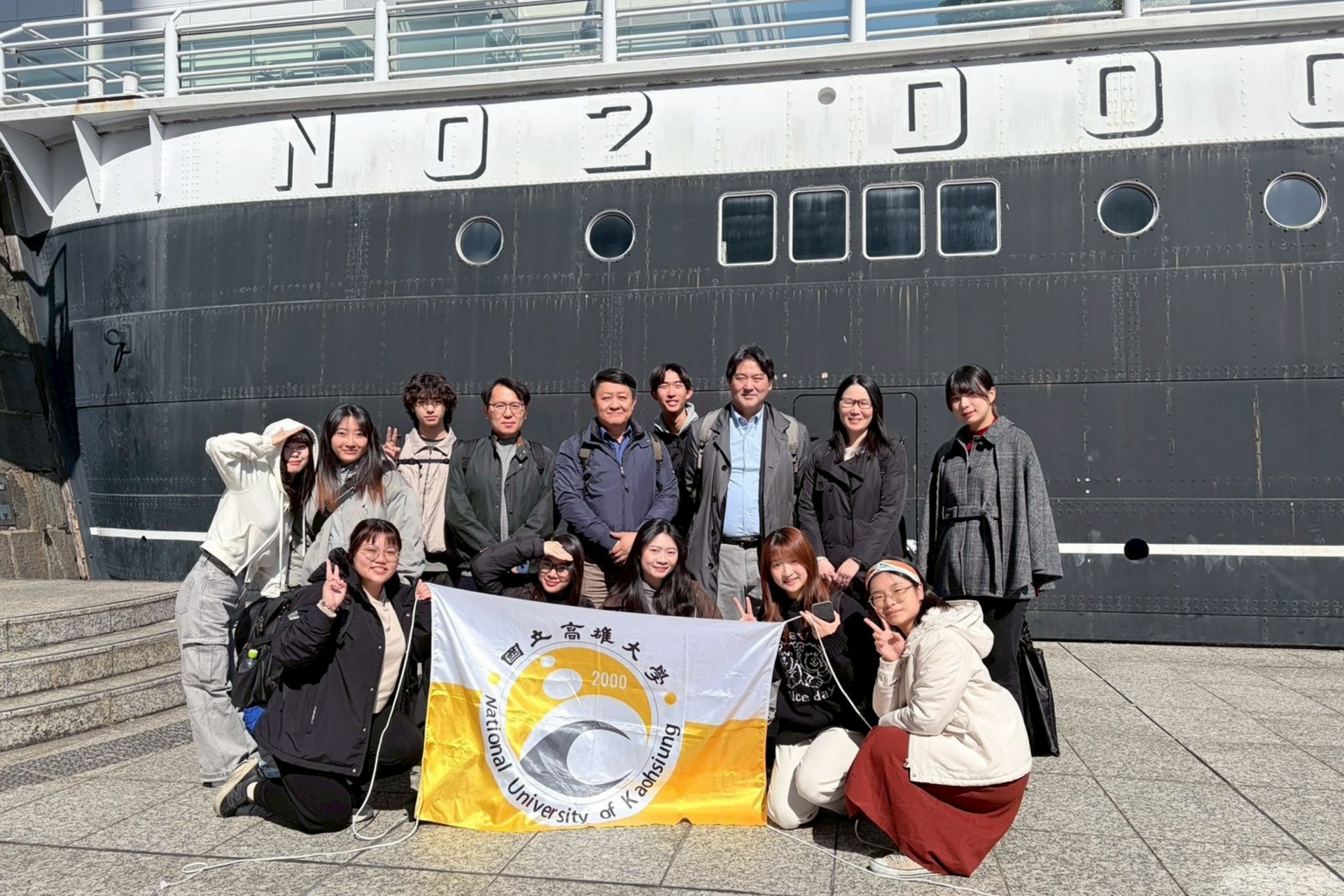


2026-03-11 Under the support of the Sakura Science Program promoted by the Japan Science and Technology Agency (JST), a delegation of faculty and students from the National University of Kaohsiung (NUK) recently traveled to Yokohama City University (YCU) in Japan to participate in an eight-day, seven-night international urban learning workshop. Led by NUK President Chi-Jen CHEN and Associate Professor Yi-Jao Chen from the Department of Architecture, the delegation included students specializing in fields such as architecture and law. Through academic lectures, field observations, and international exchange, the participants gained deep insights into the historical development, urban governance, and sustainability policies of Japanese port cities.
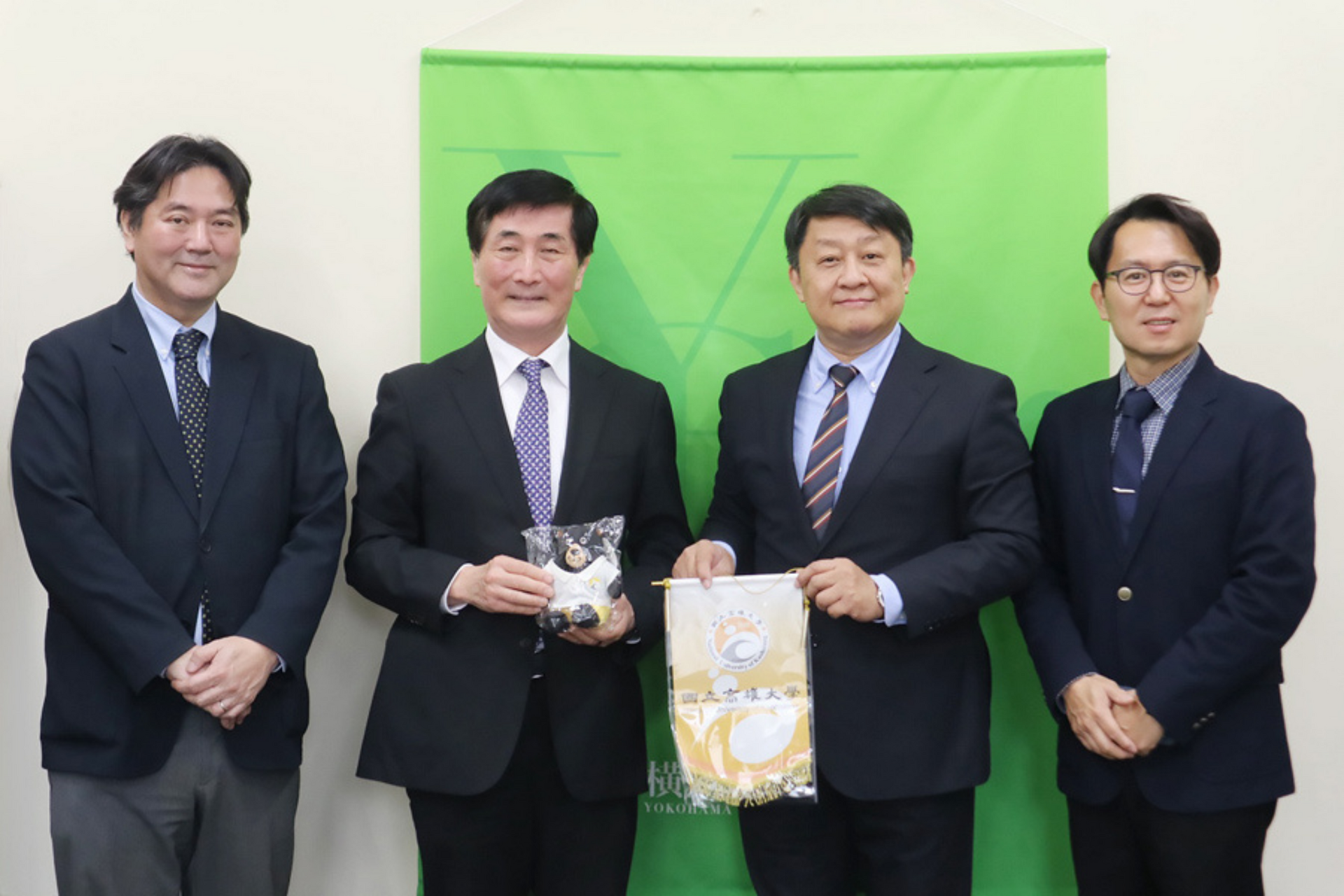
During the visit, President Chi-Jen CHEN also held a formal meeting with YCU President Yoshihiro Ishikawa to discuss future academic research, student exchanges, and international collaborative curricula. Both leaders expressed their commitment to deepening cooperation between Taiwanese and Japanese higher education institutions, specifically expanding opportunities in urban studies and interdisciplinary education.
The workshop commenced at YCU’s Minato Mirai Campus, with the participation and assistance of Professor Shinji Suzuki and Associate Professor Eri Aoki. In the opening session, Professor Suzuki presented on the "Urban Development History of Yokohama," outlining the city’s evolution since the opening of its port. The curriculum then extended to the Minato Mirai 21 district, where students learned about the historical context of urban redevelopment and the role of regional energy systems in low-carbon transitions. The group conducted on-site visits to local district heating and cooling facilities, while officials from the Yokohama Municipal Government shared the city’s net-zero emission policies and the "GREEN×EXPO" development strategy.
For courses on urban planning and community regeneration, the delegation visited the Koganecho area. YCU Professor Masahiko Nakanishi introduced Japan's urban planning systems and practical cases in Yokohama, while Professor Suzuki discussed "Art and Community Regeneration," explaining how culture serves as a catalyst for urban renewal. By visiting local art spaces and community sites, students observed how a once-declining neighborhood has gradually rebuilt its vitality through artistic and cultural initiatives.
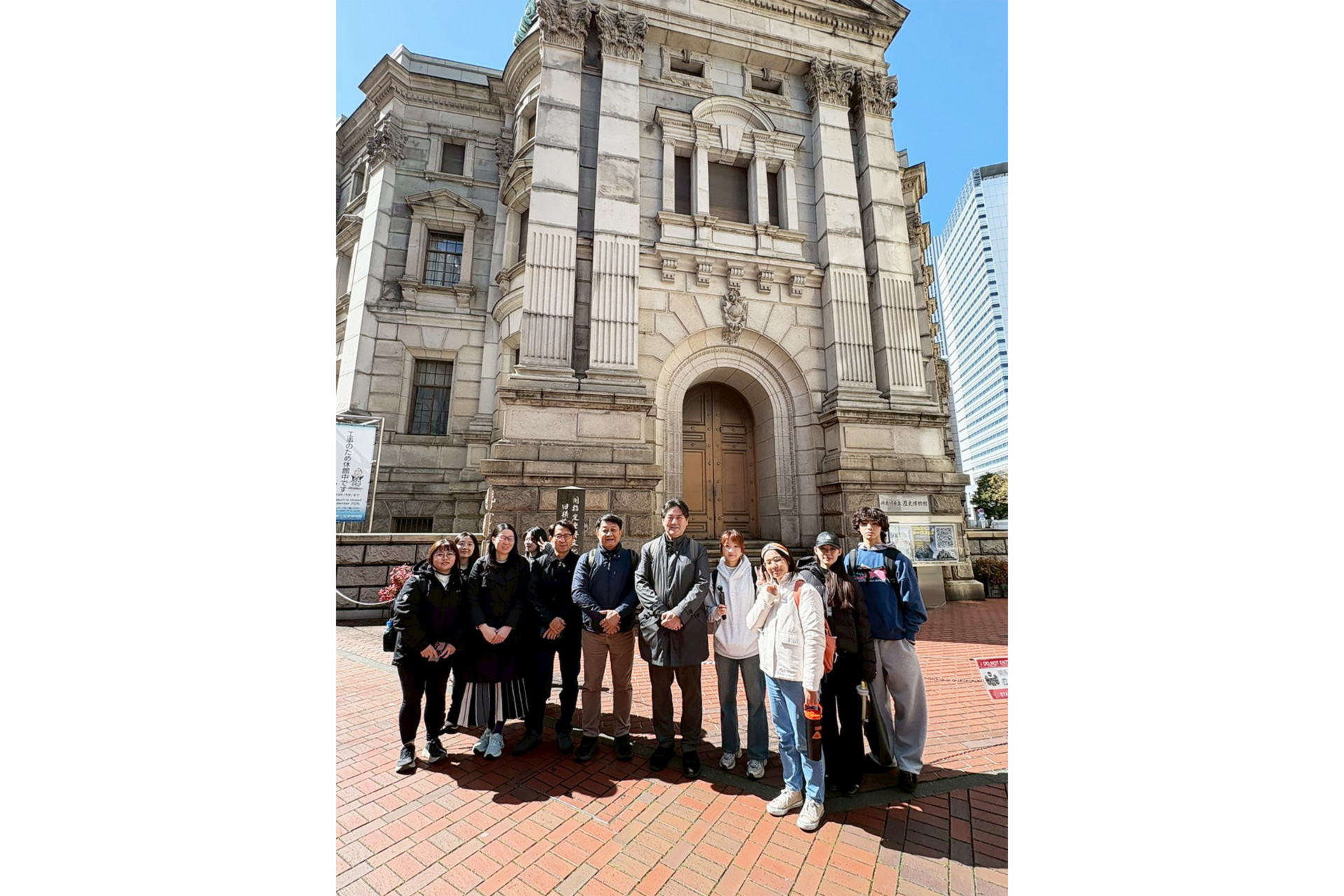
Regarding port city governance, the Yokohama Port and Harbor Bureau introduced development strategies for the Yokohama waterfront within the framework of environmental policy and Sustainable Development Goals (SDGs). Students conducted walking surveys through Motomachi, Yamate, and Yamashita Park, and visited the Yokohama Archives of History to understand the city's transformation from a traditional port town into an international maritime hub. Furthermore, the group traveled to the Marunouchi district in Tokyo. Through a specialized seminar and guided tour by Mitsubishi Estate, they learned about Public-Private Partnership (PPP) models in large-scale Japanese urban renewal projects and long-term spatial strategies for central business districts.
To observe historical urban environments, the delegation also conducted a field survey in the ancient capital of Kamakura, visiting the Great Buddha and the bamboo grove at Hokokuji Temple. Upon returning to campus, student groups presented their findings, re-evaluating the relationships between environmental policy, urban governance, and cultural preservation from the perspective of historical urban spaces. Notably, this workshop continued a collaboration established in September 2025, when a team from YCU visited NUK to study Kaohsiung’s own port city development.
President Chi-Jen CHEN stated that the Sakura Science Program provides an international platform where students can observe urban development and public policy in a real-world setting. He noted that such immersive learning not only expands students' international horizons but also provides new inspirations from different governance and cultural contexts. Moving forward, NUK will continue to deepen its partnership with international peers like YCU to cultivate talent with global perspectives and interdisciplinary skills. This international mobility experience has established a robust foundation for future cooperation in teaching, research, and student exchange between the two universities.
#SDG4 #SDG7 #SDG11 #SDG17 @Department of Architecture &Events